
In a major public address, the nation’s president conveyed a complex message of contrition and defiance during official commemorations. Speaking to supporters, he admitted to feelings of “shame” over recent events that have shaken the country, pledging to serve those affected.
“We hear the voice of the people,” the president stated. “Our duty is to them, not to stand against them.” This acknowledgment followed widespread demonstrations that presented a significant challenge to the governing authorities.
Simultaneously, the leader firmly rejected international accusations regarding the country’s atomic ambitions. He asserted that the nuclear program is entirely peaceful and expressed readiness for dialogue and verification. However, he placed blame for stalled negotiations on what he called a “high wall of mistrust” built by Western nations.
The speech came at a critical diplomatic juncture. High-stakes discussions with the United States are underway, with the threat of military escalation looming. The American administration has recently signaled a potential reinforcement of its naval presence in the region should talks collapse.
Domestically, the president’s conciliatory tone contrasted with ongoing security measures. He declined to intervene on behalf of recently detained political figures from reformist factions. Security-aligned media have accused these individuals of “sedition” for planning a national conference advocating for change.
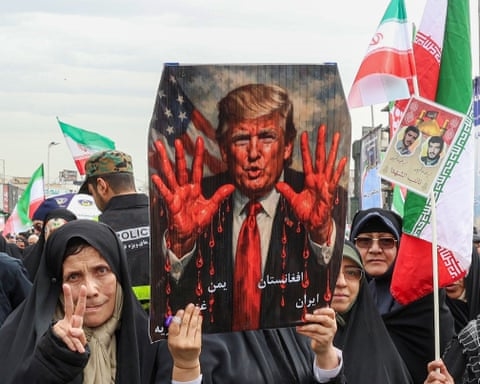
Official broadcasts of the anniversary events showed large, government-sanctioned rallies featuring anti-American slogans and flag burnings. Yet, contrasting reports from the capital told a different story, with anti-government chants reportedly echoing from residential areas the night before.
Symbolic acts of remembrance also emerged, including images of empty school desks adorned with flowers, reportedly honoring minors who lost their lives in the recent turmoil. A teachers’ association has cited a death toll of over two hundred children.
Other senior officials used the occasion to project strength. The defense minister praised the “passionate” turnout at state rallies, claiming such popular support was more potent than any weapon.
Behind the scenes, diplomatic efforts are intensifying. Iranian negotiators are working to formulate a response to American demands that navigates the country’s stated “red lines,” particularly concerning its ballistic missile program, which it considers a non-negotiable pillar of national defense. A senior security official suggested that successful talks on the nuclear issue could potentially open the door to discussions on other disputes at a later date.
The path forward remains fraught, balancing internal pressures, diplomatic maneuvering, and the ever-present shadow of international confrontation.
