
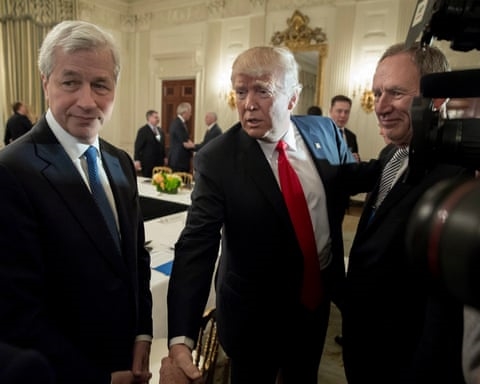
A once-promising alliance between a former U.S. president and one of the nation’s most powerful bankers has disintegrated into a high-stakes legal confrontation. The former president has filed a multi-billion dollar lawsuit against JPMorgan Chase and its longtime chief executive, Jamie Dimon, alleging the bank improperly closed his accounts for political reasons.
The relationship, initially seen as a strategic boon for the then-new administration, began with optimism a decade ago. As corporate leaders sought influence, Dimon, the head of America’s largest bank, joined a business advisory council. His stature lent significant credibility to the administration’s economic agenda, and speculation swirled about a potential cabinet role.
However, fissures appeared early. Public disagreements emerged over key policy decisions and national events, leading to the advisory council’s dissolution. Personal tensions escalated into public spats, with the banker questioning the former president’s intelligence and business acumen, and the politician retaliating with personal insults on social media.
Despite periods of alignment on certain economic policies, the fundamental rift widened. The banker became a vocal critic of the administration’s approach to central bank independence and specific financial regulations, warning that certain proposals could lead to economic instability. The former president, in turn, accused the executive of being a “globalist” opposed to his political movement and suggested the banker supported his rivals.
The legal action alleges that accounts were closed as retribution following the political fallout from the January 6th Capitol disturbances, a claim the bank has firmly rejected, stating the lawsuit is without merit and that decisions were based solely on managing legal and reputational risk.
This clash mirrors similar high-profile disputes between financial institutions and political figures in other countries, highlighting the volatile intersection of finance, politics, and personal rivalry. The lawsuit marks a dramatic nadir in a relationship that has transitioned from wary collaboration to open hostility, with significant financial and political implications.
