
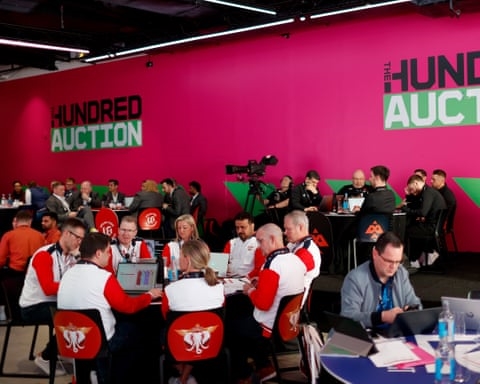
A landmark auction for The Hundred women’s competition has set new financial benchmarks, with star internationals commanding fees exceeding £200,000. However, the event also cast a glaring spotlight on the persistent lack of female representation in the coaching and executive ranks of the tournament.
The inaugural player draft saw fierce bidding, resulting in record-breaking contracts that dwarf the total squad salaries from the league’s inception just a few years ago. The atmosphere was a blend of modern spectacle and traditional auction-house drama, streamed to a global online audience.
Yet, within the bidding room itself, a different picture emerged. Observers noted that the vast majority of team decision-makers present—coaches, analysts, and franchise officials—were men. Only a handful of women were visible at the team tables, with some squads represented by entirely male contingents.
This contrast was not lost on the few women in senior coaching positions. One head coach expressed disappointment at being the only woman in such a role across the competition, emphasizing the need for more opportunities for qualified female coaches to progress. The sentiment was echoed by other female specialists involved, who hope that as more women play professionally, a stronger pipeline for coaching and leadership roles will naturally develop.
The structure of The Hundred, which involves private franchise ownership, has shifted control away from traditional cricket governing bodies. This shift, while bringing significant investment, has also led to concerns about the diversity of hiring practices at the highest levels of team management.
The auction also raised questions regarding the selection of overseas players, with two highly-ranked Pakistani cricketers surprisingly going unsold. While logistical reasons were cited, their omission was notable given the context of the sport’s commercial landscape and its fanbase.
As the tournament turns its attention to the men’s auction, where even larger sums are expected, the focus will remain on whether the competition’s celebrated progress on the field will be matched by a genuine commitment to diversity off it. The record salaries for players mark a step forward, but the composition of the rooms where decisions are made tells its own story.
