
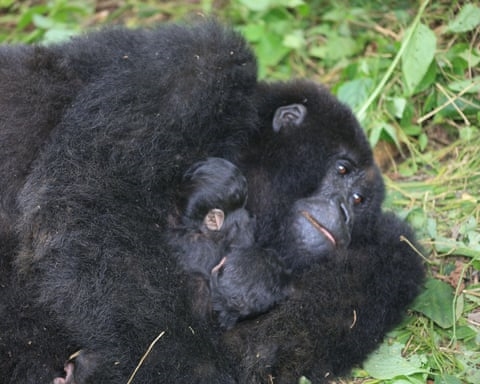
In the dense forests of Virunga National Park, a remarkable event has unfolded. A mountain gorilla named Mafuko has given birth to twins, a rare occurrence that has drawn cautious optimism from conservationists. The newborns, both males, were observed in early January, clinging to their mother in a forest clearing.
Twin births among mountain gorillas are exceptionally uncommon and come with significant risks. High infant mortality rates mean the first weeks are critical. Rangers report that the twins appear healthy so far, but they remain under close daily observation. Mafuko, an experienced mother, is caring for both infants attentively, though she has faced tragedy before—a previous set of twins she bore in 2016 did not survive beyond a few days.
The birth adds to the growing Bageni family group, which now numbers 59 gorillas, and marks another step in the slow recovery of this endangered subspecies. Decades ago, mountain gorillas were on the brink of extinction, with only about 250 individuals remaining. Intensive conservation efforts have since helped the population rebound to over 1,000, leading to its reclassification from critically endangered to endangered.
However, challenges persist. Virunga, particularly in the Democratic Republic of the Congo, remains a perilous environment for both wildlife and rangers. Armed groups and poachers operate in the area, and over 220 rangers have lost their lives in the park over the past two decades.
Veterinary care has been instrumental in the species’ revival, with specialized teams often intervening to treat gorillas injured by snares or other human-related threats. For now, the focus is on minimizing disruption to Mafuko and her twins, allowing natural maternal care to take its course.
While the twins have not yet been named, their early progress offers a glimmer of hope. As one ranger noted, the sight of the two infants is a poignant reminder of both the fragility and resilience of these iconic animals.
