
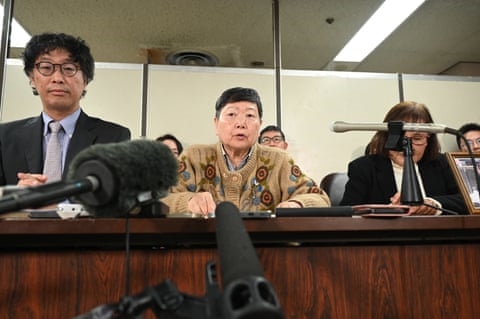
A Tokyo court has ruled that the North Korean government must pay damages to four individuals who were deceived into emigrating from Japan decades ago, only to face exploitation and separation from their families.
The plaintiffs, now elderly, were part of a large-scale resettlement program that ran from 1959 to 1984. Promoted as a humanitarian effort, it enticed tens of thousands of people of Korean descent living in Japan with promises of a socialist paradise offering free housing, education, healthcare, and employment.
Upon arrival, however, they encountered harsh conditions, forced labor, and severe restrictions on their freedom. The program, critics assert, was primarily a scheme to address North Korea’s labor shortage with skilled workers. The settlers were effectively trapped, cut off from returning to their families in Japan.
One plaintiff, an 83-year-old woman who spent 43 years in North Korea before escaping in 2003, described realizing the deception immediately upon arrival. She has since lost contact with some of her children still inside the isolated country.
While the court awarded each plaintiff significant compensation, legal experts acknowledge that collecting the funds from North Korea will be extremely difficult, if not impossible. The ruling is seen primarily as a symbolic victory and a formal judicial condemnation of the North’s actions.
Human rights organizations have welcomed the verdict as a crucial step in holding North Korea accountable for its international transgressions. The case marks a rare instance where a Japanese court has exercised its jurisdiction to rule against the Pyongyang regime for its past abuses.
