
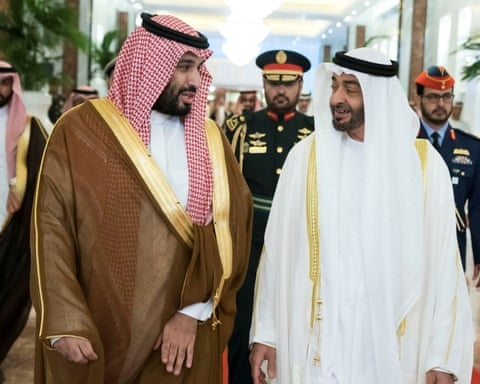
A once-formidable alliance between two of the Middle East’s most influential powers has fractured, with significant implications for regional stability. The strategic partnership between Saudi Arabia and the United Arab Emirates, which for years coordinated closely on foreign policy, has given way to public acrimony and competing interests.
The breakdown stems from fundamental differences in national vision. Saudi Arabia is primarily focused on an ambitious domestic transformation under its Vision 2030 agenda, requiring a stable regional environment to attract foreign investment. The UAE, in contrast, has pursued a more assertive and interventionist foreign policy, convinced that actively shaping political outcomes—particularly by countering Islamist movements—is essential for long-term security. This divergence has turned former collaborators into rivals across multiple fronts.
Economic competition has fueled the discord. Disagreements over energy production quotas within OPEC have been compounded by Saudi policies incentivizing multinational corporations to establish regional headquarters within its borders, a move seen as drawing business away from the UAE’s commercial hubs like Dubai.
The consequences of this split are being felt far beyond the Arabian Peninsula, particularly in conflict zones where both nations have wielded influence. Their competing proxies have clashed in Yemen’s civil war. Furthermore, the UAE’s support for various factions—from Libya to Sudan—now operates without the previous constraint of Saudi partnership, raising fears of escalated conflicts and deeper regional fragmentation. Recent tensions between Somalia and the breakaway region of Somaliland further highlight how this Gulf rivalry is introducing new complexities across the Horn of Africa.
While a return to open confrontation akin to the 2017 blockade of Qatar is unlikely, the diplomatic divorce is real. The erosion of a unified Gulf strategy complicates efforts to resolve longstanding conflicts, from Yemen to Sudan. It also undermines cohesive Arab diplomacy on critical issues, including the pursuit of a Palestinian state. The unraveling of this key partnership suggests a more volatile and contested period ahead for the broader Middle East, where local conflicts risk becoming arenas for a quiet struggle between these two powerful neighbors.
