
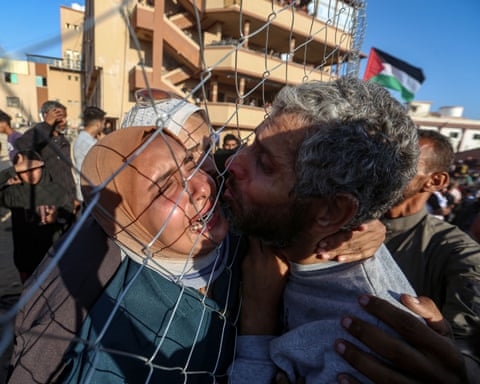
The Rafah border crossing, a critical passage for the Gaza Strip, has resumed operations. However, transit remains under stringent restriction, with Israeli authorities exclusively determining who may enter or depart. Among thousands of patients with formal approvals for external medical care, only a minimal number have been permitted to leave, and fewer have returned. Concurrently, military actions persist, with Palestinian casualties continuing to mount since last autumn’s truce.
In the West Bank, the forced displacement of Palestinian communities is intensifying. United Nations agencies, alongside Israeli military personnel and observers, report an increasing convergence between official army operations and violence perpetrated by Israeli settlers. Certain reserve units, recruited from these settlements, are alleged to function as paramilitary groups.
These conditions define the ongoing reality of the occupation, now in its sixth decade. Recent statements from Israeli leadership have affirmed an intention to maintain overarching “security control” over the entire territory between the Jordan River and the Mediterranean Sea indefinitely.
A mounting consensus among international legal scholars and human rights analysts interprets this not as a temporary security posture, but as a permanent system of demographic domination—a structure they label as apartheid. This framework, codified in international law following the South African regime, refers to an institutionalized regime of systematic oppression and inhuman acts committed by one racial group to maintain control over another.
The argument rests on the application of distinct legal and physical systems for two populations inhabiting the same land. Approximately 7.5 million Jewish Israelis enjoy full civil rights and freedom of movement. A similar number of Palestinians live under varying strata of control and discrimination, their rights contingent on whether they hold Israeli citizenship, Jerusalem residency, or live under military administration in the West Bank or Gaza.
Central to this critique is the comprehensive permit regime governing Palestinian life. Authorization is required for leaving Gaza, pursuing higher education, accessing specialized healthcare, working inside Israel, or praying at holy sites in Jerusalem—permits that are routinely denied. In the West Bank, hundreds of thousands face arbitrary, undisclosed travel bans, often discovered only at checkpoints.
This separation is materially embedded in the landscape. A segregated network of roads serves the populations. Israeli settlers travel on modern, direct highways constructed through Palestinian areas, from which Palestinians themselves are frequently barred. Palestinian traffic is diverted onto older, circuitous, and often dilapidated “fabric of life” roads that pass beneath or around the settler thoroughfares.
The legal duality is equally stark. An Israeli citizen and a Palestinian from the West Bank committing the same offense in the same location face entirely different judicial systems: the former in civilian courts with full legal protections, the latter in military tribunals where conviction rates are exceedingly high.
While Israeli governments have consistently rejected the apartheid characterization as inflammatory and antisemitic, asserting the situation is a temporary occupation driven by security needs, the viewpoint is gaining traction within Israel itself. Former high-ranking security officials, diplomats, and historians have begun to apply the term, citing government policies that entrench separation and inequality.
This perspective was notably echoed in a significant, though non-binding, 2024 advisory opinion from the International Court of Justice, which found Israel in breach of multiple international laws and identified practices amounting to apartheid.
Proponents of this analysis argue that internal political dynamics offer little prospect for systemic change, given the insulated normalcy experienced by the Israeli electorate. They contend that the situation for Palestinians is deteriorating, marked by accelerated settlement expansion, home demolitions, and community displacement. Consequently, they assert that meaningful change will likely require external diplomatic and economic pressure to alter the fundamental calculations of the governing authority.
The central question posed is how future historians will regard this period: as a prolonged, violent conflict, or as an era defined by a legally enforced system of separation and demographic control.
