
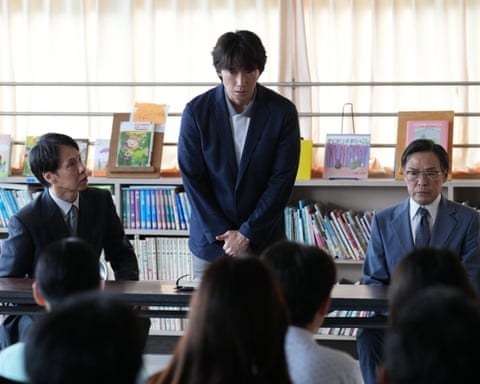
In a striking departure from his usual cinematic extremes, director Takashi Miike turns his lens to the sobering world of a courtroom. His latest film, however, is far from a conventional legal procedural. It dissects a notorious real-life scandal that once gripped Japan, exploring the devastating fallout of a shocking accusation.
The story centers on a primary school educator charged with the severe abuse of a student, allegations that included racial taunts and physical violence so severe they allegedly drove the child toward suicide. The charge stemmed from the boy’s mixed heritage, a detail weaponized in the claims. Yet, a haunting question lingers: was the child a victim of his teacher, or a pawn manipulated by a parent?
The narrative structure deliberately presents two conflicting realities. The first perspective, aligned with the prosecution, paints the teacher as a monstrous figure. The second, and far more extensive account, reveals a compassionate educator caught in a nightmarish spiral. This version suggests the initial accusation was a fabrication, and that a well-intentioned attempt to resolve a minor classroom incident through apology was catastrophically misinterpreted, snowballing into a life-ruining scandal.
While the film ultimately leaves little doubt about where factual truth resides, Miike’s signature style pulses beneath the surface. The sequences from the accuser’s viewpoint are charged with a palpable, almost horror-like tension, recalling the director’s past explorations of psychological terror. The film powerfully captures the suffocating atmosphere of rumor, institutional cowardice, and the public’s rush to judgment.
The case itself has left a profound mark on Japanese culture, indirectly influencing other major cinematic works in recent years. Miike’s unflinching retelling forces a reckoning with the mechanics of defamation and the fragility of truth in the face of collective outrage.
