
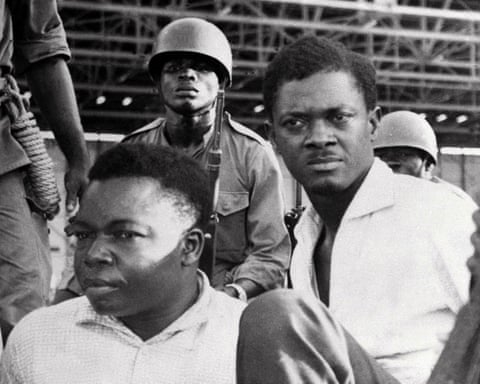
A Brussels court has ordered that a 93-year-old former Belgian diplomat stand trial for alleged complicity in the 1961 assassination of Patrice Lumumba, the first prime minister of the newly independent Democratic Republic of the Congo.
The defendant, Étienne Davignon, is the sole surviving individual among ten Belgians accused by the Lumumba family of involvement in the killing. He faces charges of participating in war crimes related to the events leading to Lumumba’s death.
The ruling, which follows a prosecutor’s referral last year, is subject to appeal. Davignon, who later served as a vice-president of the European Commission, has previously denied the allegations.
Relatives of the slain leader described the court’s decision as a pivotal moment. “This is not the conclusion of a long struggle, but the start of an accounting that history has long required,” a family statement read.
Legal representatives for the family hailed the move as establishing a historic legal precedent for addressing crimes allegedly committed under European colonial rule. If the trial proceeds, Davignon would be the first Belgian official prosecuted in connection with the assassination, which occurred 65 years ago.
The court’s mandate extends beyond the prosecutor’s initial scope, also covering the murders of Lumumba’s two associates, Maurice Mpolo and Joseph Okito, who were killed alongside him.
The specific charges against Davignon, as outlined by the Brussels court, include the unlawful transfer of the prisoners from the capital to the Katanga region and their subjection to “humiliating and degrading treatment” prior to their deaths.
Patrice Lumumba, aged 35, was tortured and executed by a firing squad in January 1961. The murders were carried out by Katangan separatists with the backing of Belgian mercenaries. Davignon was a 28-year-old diplomatic intern in the Congo on the eve of its independence in 1960.
The defendant was not present for the recent hearing. His legal counsel stated it was premature to comment but confirmed an analysis of potential appeals was underway. In prior proceedings, the defense reportedly contested the war crimes allegations and argued that the excessive passage of time should preclude a trial.
A Belgian parliamentary inquiry in 2001 concluded that government ministers of the era bore “moral responsibility” for the circumstances that led to Lumumba’s death. In a symbolic act in 2022, Belgium returned Lumumba’s gold-capped tooth—kept as a grisly trophy by one of his killers—to his family.
During the ceremony for the tooth’s repatriation, a former Belgian prime minister acknowledged this moral responsibility, stating that officials of the time failed to act to prevent Lumumba’s transfer to a location where his life was in grave danger.
Legal experts suggest that, barring a successful appeal, a trial could commence in early 2027. Observers note that while reparations claims against former colonial powers have succeeded before, this potential trial is viewed as unprecedented—a criminal prosecution of a state actor for a political murder from the colonial era.
