
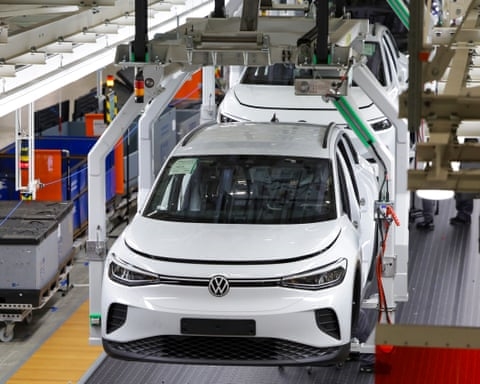
Volkswagen Group, Europe’s largest automotive manufacturer, has unveiled plans to eliminate approximately 50,000 positions by 2030. This substantial workforce reduction comes as the company contends with a sharp decline in profitability and a challenging international landscape marked by trade barriers and shifting market dynamics.
The announcement follows a reported 54% plunge in the group’s pre-tax earnings, which fell to €8.9 billion. Company leadership cited punitive import duties imposed by the United States and a significant strategic recalibration at its Porsche subsidiary as primary factors behind the profit slump. Porsche’s own operating profit saw a dramatic 98% decrease last year.
While a prior agreement with labor unions in late 2024 accounted for 35,000 job cuts through natural attrition, the new plan expands the total reduction and will impact operations across Germany. The decision reflects a broader corporate restructuring effort designed to achieve a 20% reduction in costs by 2028.
The automaker is navigating multiple pressures simultaneously. In China, its largest single market, intense local competition has eroded the company’s share. In response, management has promised an unprecedented wave of new model launches in the region to win back customers.
Furthermore, the broader transition to electric vehicles (EVs) continues to present financial and strategic hurdles. Volkswagen has recently scaled back several EV production targets across its portfolio, including at its Lamborghini division, in response to slower-than-anticipated consumer adoption and infrastructure challenges.
Adding to the uncertainty, executives warned that ongoing geopolitical instability, particularly conflict in the Middle East, could dampen consumer demand for its premium Audi and Porsche brands. While the company’s supply chains remain unaffected for now, such volatility in energy and commodity markets presents a persistent risk.
“The world we operate in has fundamentally changed,” stated the group’s CEO, Oliver Blume. “We are making tangible progress on our realignment, but we face intense competition and a fragile global economic environment.” The company’s official statement highlighted expected challenges from “restrictions in international trade and geopolitical tensions,” which increase market volatility and competitive pressure.
