
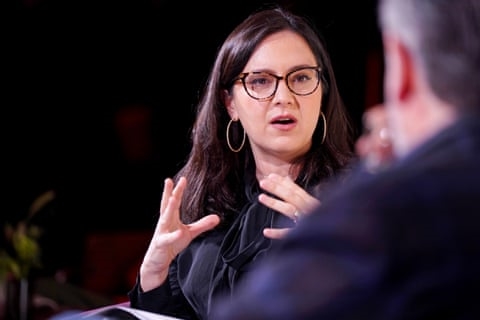
In her first major address to the staff of CBS News, newly appointed editor-in-chief Bari Weiss directly confronted the skepticism and internal unease that has marked her early tenure, while laying out a sweeping plan to reinvent the storied network for a modern audience.
Speaking to employees, Weiss acknowledged the “tumult and noise” surrounding her leadership and did not ask for their trust, but vowed to earn it through “transparency, clarity and straight talk.” She framed her mission as a necessary fight to restore public trust and relevance to a major news institution, bluntly stating that the network’s current product is not one “that enough people want.”
“The honest truth is: right now we are not producing a product that enough people want,” Weiss told staffers, citing a decline in trust in mainstream media and a failure to adapt to new formats. She warned that clinging solely to a traditional broadcast television audience is a failing strategy. “If we stick to that strategy, we’re toast,” she declared.
Weiss, whose media company was recently acquired by the network’s parent corporation, outlined a strategy to “make CBS News fit for purpose in the 21st century.” This includes a significant expansion of on-air contributors, adding 18 new voices from politics, academia, and culture. She described the network’s editorial stance as one aimed at the political center and its adjacent wings.
The town hall also provided a forum for airing staff concerns, some of which were submitted anonymously. One question read aloud described a “chilling effect” in the newsroom, with employees reportedly “afraid for their jobs and afraid to even speak for fear of retaliation.”
Weiss faced specific questions about a controversial decision to delay a 60 Minutes segment late last year. She expressed regret over the handling of the situation, which involved a report on Venezuelan migrants, calling it a “logistical nightmare” and assuring staff that such a scenario would not be repeated. She denied that corporate leadership pressured her to hold the story, stating their conversations had solely been about “fairness.”
Despite the palpable tensions, the event concluded with a show of support from veteran anchor Gayle King, who dismissed rumors of her departure and praised Weiss for presenting a clear vision. “It’s good for them to see you’re a real person and this is what you want,” King said, addressing her new boss directly.
Weiss ended her remarks by acknowledging that her ambitious, startup-like approach to transforming the network “isn’t for everybody,” but expressed confidence in the team’s ability to succeed. “I took this job because I believe that in my bones,” she said, framing the effort as crucial for the health of American institutions.
