
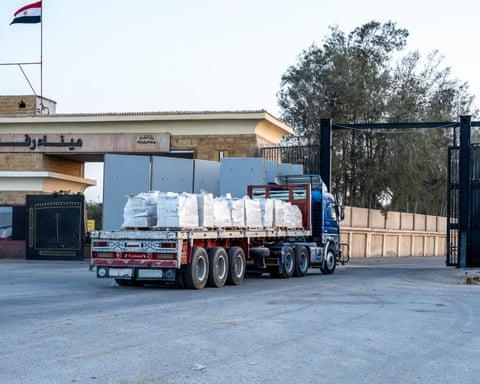
Preparatory work is underway to resume operations at the Rafah border crossing, the primary gateway between the Gaza Strip and Egypt, according to coordinating officials. While a specific timeline for the first movements remains unclear, the crossing is anticipated to open for passenger transit soon.
The facility, which has been largely closed for nearly two years, will initially permit movement in both directions strictly for pedestrians. Coordination for the reopening is being managed jointly by Israeli, Egyptian, and European Union authorities.
Israeli officials state that passage will be strictly regulated, allowing primarily for the departure of Palestinian civilians seeking to exit the conflict-affected territory and the return of some who fled earlier in the hostilities. Reports indicate that thousands of individuals, many requiring urgent medical treatment unavailable locally, are awaiting the opportunity to leave. Initial transit capacity is expected to be limited to several hundred people per day.
The move to reopen Rafah was a stipulated condition in the initial phase of an internationally-backed ceasefire agreement. That truce, established last autumn following prolonged violence, has faced repeated strains due to sporadic clashes. Recent days have seen a significant escalation in aerial bombardments, with strikes reportedly targeting areas in southern Gaza.
Future phases of the established peace framework envision a handover of administrative control within Gaza to a Palestinian civilian authority, the demilitarization of armed factions, and a withdrawal of military forces, accompanied by an international security presence and reconstruction efforts. However, fundamental disagreements persist over the disarmament process, with the governing authority in Gaza rejecting the condition and Israel vowing to enforce it if necessary.
