
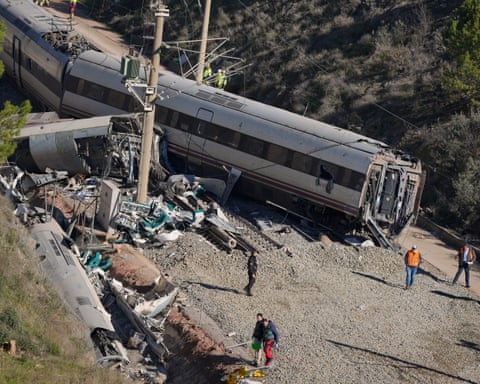
A series of catastrophic rail incidents in Spain, resulting in dozens of fatalities, has prompted the country’s main train drivers’ union to call for a three-day nationwide strike next month. The industrial action is a direct response to what the union describes as systemic safety failures, demanding urgent guarantees for the protection of both railway staff and the traveling public.
The call to strike follows two separate and devastating accidents within days of each other. The first, a high-speed train collision near the town of Adamuz in Andalucía, claimed 43 lives and left scores injured. Merely two days later, a derailment in Catalonia caused by a collapsed wall killed a driver and injured 37 others. These tragedies were compounded by a third, non-fatal incident in Murcia involving a commuter train and a construction crane, further heightening concerns over network integrity.
The union, Semaf, has declared the strikes for early February, framing the action as a last resort. It asserts that repeated warnings about deteriorating track conditions and safety protocols have been ignored by authorities for months, if not years. The recent loss of life, the union stated, represents a critical juncture requiring immediate and comprehensive corrective measures.
In response, the national transport minister acknowledged the profound impact of the week’s events on driver morale but expressed hope that the strikes could be avoided. He emphasized that investigations into the two major accidents are ongoing and that they are currently viewed as separate incidents with distinct causes, with the Catalonia derailment preliminarily linked to severe weather.
The investigative focus on the Adamuz collision has zeroed in on a section of track exhibiting a significant fracture. Officials report finding unusual markings on the wheels of multiple trains that traveled the route, though the origin of these marks—whether from debris or a failing rail—remains undetermined. A full laboratory analysis is underway.
The national mourning period has been overshadowed by political discord. Opposition parties have seized on the disasters to criticize the government, with far-right figures alleging a broader decline in public safety and linking the tragedy to allegations of government corruption. The government has condemned such statements as exploitative and irresponsible during a time of collective grief.
As Spain grapples with the aftermath, the looming strike underscores a deepening crisis of confidence in one of Europe’s most extensive rail networks, with hundreds of thousands of passengers facing disruption amid urgent calls for a fundamental safety overhaul.
